I’m posting this just in the nick of time in order to meet one of a few personal goals of mine.
In order to hold myself accountable I’m going to share them here & post updates as to how they are going throughout the year. I’m hope it will help me see the positive in things during the challenges of being in a pandemic has for people.
Goal 1: Write 1 blog post a month for 2021. (Monthly goal)
With this post I’m 2/2! It’s been hard getting my mind back into writing. Part of me thinks I don’t have much to say & part of me is afraid of what others will think. I was writing frequently up until about 4 years ago & then I stopped abruptly.
I feel like this while trying to overcome my own mindset.
After Christmas this year I found myself in the Apple Store with gift cards in hand asking many questions about the Apple Watch. The Apple store was incredible during Covid. I felt completely safe & had a watch table as well as a sales associate all to myself. I ended up buying one & it has been a game changer for me. Interpreting its daily feedback to me on my heart rate, steps, exercise, & sleep has been exciting & informative. It’s given me a way to be accountable to my own health & has pushed me to get out for evening walks when I’m short of my move & exercise goals for the day. I’ve summed up this goal simply by can I get to 10 000 steps a day for 2021. I’m excited to say that through 59 days I’m 58/59. This has brought me closer to my kids who who have willingly joined me for brisk walks. This unintended benefit gives me a casual way to keep connected to them while also helping my cardiovascular fitness. They usually out pace me for the day as they keep tabs of their steps in their notebooks. It’s been a routine of theirs to record their steps & beat their own personal records. I may adjust the 10k step goal to more as I progress through the year. I want to start running 5 km runs in my neighborhood. Hopefully bringing one or both of my kids with me.
Goal 3: Reading Consistently (Weekly goal)
It’s no secret to those who know me that I’m trying to read more. This came from me wanting to able to provide recommendations to my students but to also keep up with quality reads for my own two kids at home. The stacks of books on my night stand at home & the downloaded audiobooks to my audible account can attest to always want to able to read more.
Last year I read 77 books. This year I wanted to strike a bit more of a balance to my reading and moving goals. I decided to up my goal to 78 books which works out to being 1.5 books per week. Through 8 & 1/2 weeks I’m at 16 books & according to Goodreads I’m 4 books ahead of the pace I’ve set for myself. Amongst those 16 books include many YA/Middle Grade Reads, fiction & non-fiction audiobooks, & some thoughtful picture books that I want to include into my teaching practice. Audiobooks have kept me company on evening walks after the kids are in bed. It’s quite enjoyable and helps the kilometres pass by quicker.
In the time of Covid mental health awareness is so important. These goals I’ve mapped out for myself this year have been helping me gain some semblance of direction while struggling with the current constraints Covid-19 has us in… with many differences in our daily, weekly, or monthly routines. Looking forward to seeing you soon on my next post where I will likely update you with how things are going with my goals and possibly musings on other topics.
This is my first blog post since August 2017. I hope you enjoy me sharing some of my favourite reads during 2020 here. This year I read 77 books from a variety of genres. My top lists below are a compilation of the books I read/listened to this year. I also want you to know that is was difficult for me to choose just 3 for some of these categories and you can check out all the books I read this year on “My Year in Books” on Goodreads.
My Top 3 (Middle Grade – Young Author) Fiction Books For 2020
The Remarkable Journey of Coyote Sunrise
Dan Gemeinhart authored a beautiful middle grade novel that gives you all the feels. It has moments of gut wrenching sadness & heart smiling ones that fill your soul. Coyote, Rodeo, & their new friends give further reason to believe in the goodness of humanity. This one filled me up! ❤️ Many students will feel the same way!
2. Maybe He Just Likes You
Maybe He Just Likes You by Barbara Dee is an important age appropriate Middle Years fiction book that addresses harassment & strength of character. Prior to reading I heard about this book & it peaked my interest as a parent. It’s a book I learned that needs to be read & discussed by all kids. Mila is grade 7 student dealing with harassment from a group of boys. Some topics addressed include: “she is overreacting & they are just joking”, “it’s just flirting”, friends offering advice, & her self doubt about what she should/shouldn’t say about it & to who. Mila strength shines through. I cannot recommend this one enough!
3. The Line Tender
I fell in love with The Line Tender by Kate Allen. Once I got going with it I found it hard to put down! It’s a YA read that focuses on friendship, kindness, passion for doing what you love, & dealing with the powerful emotions that grief brings. I appreciate how Allen connected these themes through Lucy’s voice, engaging supporting characters, & Lucy’s want to learn more about her Mom & her passion for doing what’s best for sharks.
My Top 3 Graphic Novels for 2020
Dragon Hoops
Dragon Hoops by Gene Leun Yang has been a popular read by a lot of my students in 2020. This Graphic Novel tells the true story of the basketball team at a teacher’s school. It’s a kaleidoscope look at his story, the sport, it’s culture, history, the high school team, it’s players, coaches, & their journey. In this story the reader will witness the complexities of story telling & being true to each person’s story & how their individual story fits into the collective story of the Dragon’s Season.
2. Class Act
Class Act by Jerry Craft is an important & enjoyable companion graphic novel to his Newberry Award winning book “New Kid”! Students in my class couldn’t wait to get their hands on this one. It’s been passed around to a lot of students in our room this year. This story finds Jordan & Drew back at Riverdale Academy this time focusing on Drew who is trying to navigate his feelings on friendships, racial stereotypes, micro aggressions, & gaining a deeper understanding/appreciation of others and self.
3. White Bird
White Bird by RJ Palacio is a beautiful & gut-wrenching WWII graphic novel that gives more of the back story to Julian & his family from RJ Palacio’s Wonder. The art work is stunning in this book & the story pulls you along. What a powerful read!
My Top 3 Picture Books of 2020
I Am One
I received this book as a gift from a family in my class. I am One by Susan Verde is a thoughtful & inspiring little picture book that supported with conversation is sure to get kids & adults alike believing & seeing their actions making a difference.
2. Cloudwalker
Cloudwalker by Roy Henry Vickers and Robert Budd is a beautifully told & Illustrated story that tells of the creation of 3 of the largest salmon bearing rivers in Northern British Columbia. It also masterfully shares how these rivers are the source of life for all the creatures in the area.
3. The Word Collector
The Word Collector by Peter H. Reynolds is fun picture book with engaging imagery. I used this book introduce the concept of triple scoop words (descriptive words) and how to identify and use them in their own writing with my students. This book would also be great with younger students to point out the power words can have.
My Top 3 Young Author – Teen Fiction Books for 2020
Salt to The Sea
I can’t believe I waited so long to read this one! It’s been sitting in my to read pile for a while. Salt to the Sea by Ruta Septys is a YA/Teen Historical Fiction novel that is told masterfully from the perspectives of 4 young people whose lives become intertwined as they journey towards passage & refuge during World War II on the navel ship Wilhelm Gustloff. This is one that readers historical fiction will love.
2. Shout
Shout is a haunting & powerful Mature Teen reads memoir written by Laurie Halse Anderson in free verse. This is a follow up to her book Speak. She tells her story of being raped, family struggles with PTSD, alcoholism, abuse, & substance abuse. In telling her story, she encourages other victims to be vulnerable & shout their stories rather than be silenced by shame & society. This book is a call to action to listen to those who are brave enough to shout their stories. Powerful read!
3. The Skin I’m In
The Skin I’m In by Sharon Flake is a powerful must read YA/Teen novel. I’m so glad I read this one. It’s been on my to read list for a while. Maleeka is a character full of self doubt & low self esteem due to giving power to the hateful/discriminating words/actions of people who call themselves her friends yet do not have her heart in their best interests. Through these awful experiences she has trouble trusting her conscience & those people who do see her strengths & beauty.
Top 3 Non-Fiction Books For 2020
Just Mercy
Just Mercy is Bryan Stevenson’s incredibly powerful & heartbreaking true story of being a lawyer, humanitarian, social justice activist, & founder of the Equal Justice Initiative (a non-profit law firm in Alabama) is a must read. Bryan’s journey tells many insightful, heart-breaking, & fist pumping stories defending the poor, the incarcerated, the young , & the wrongly accused. These stories will rock you to your core as you wonder how to mend a system to make it more just for all.
2. Seven Fallen Feathers: Racism, Death, and Hard Truths in a Northern City
Seven Fallen Feathers by Tanya Talaga is a powerful must read book that tells the kaleidoscope view of the inequities & racism that is faced by First Nation’s people when dealing with the police service in Thunder Bay. The immense challenges faced by families who experienced residential school inflicted generational trauma on those families. 7 Fallen Feathers tells the individual stories of 7 students who end up dead under mysterious circumstances over a number of years in Thunder Bay, Ontario & the challenges faced by their families in getting answers about their deaths. Many of these cases did not follow proper protocol & highlighted the inequities faced by indigenous communities.
3. The Devil’s Highway
The Devil’s Highway by Luis Alberto Urrea is a powerfully written and well researched true story about the Yuma 14. The story of 26 people who were sold on the dream of going to the United States via a coyote… only to have 14 of them die in the desert. I like how he includes their stories, the stories of the survivors, boarder guards on both sides of the boarder, the coyotes, the cartels, the American public, the history of the topic & region to give you the bigger picture of this awful moment & others like it. This is a must read book on the topic! It is a book the author of American Dirt read prior to writing her fictional book.
My Top 3 Fiction Books for 2020
Indian Horse
Indian Horse by Richard Wagamese is a beautifully written Historical Fiction book that is an important read/listen for all Canadians. I enjoyed it on audible. It gives a greater perspective on the awful impact of the Indian Residential School on a boy learning to be a man & doing that while battling life circumstances and the demons he encountered at the Indian Residential School to find peace/joy in the game of hockey & in life.
2. Where The Crawdads Sing
This was a captivating read/listen that held my attention from the first words I heard Kya speak. Her story was compelling & heartbreaking! It kept you wanting more for her & kept you cheering her on the more as you learned about her & the mystery that was unraveling. Take the time to read/listen to this one!
3. 419
419 by Will Ferguson is an enjoyable fictional thriller. A father duped in a Nigerian Scam… A family & daughter left with questions… another world away… the story of the challenging life in Lagos, Nigeria… home of the 419 & of those who prey & feel preyed upon. I recommend this listen on audible! It’s filled with many twists & turns.
This post is inspired by a few people. First is Chris Kennedy who for many years now has shared his top 3 lists at the end of each calendar year for a number of years now. He reflects on a variety of topics related to education, personal well being, interesting observations of his/our world, and favourite things he enjoyed for the year. You can read his 2020 post here. It’s a must read post for me each year and for a while now I’ve been intending to do something similar. This post is my attempt at that.
The second inspiration for this post is Pernille Ripp. Pernille for years now has been graciously sharing her personal passions for having students find joy in reading and the many wonderful books that she shares with her students and with her audience globally. Pernille’s creation of the Global Read Aloud is the single greatest influencer in me reading more for enjoyment and reading more quality middle grade and young author books. My two main goals each school year now is to help connect each student each year with their next favourite book or author and to bring honour in finding joy in reading. I was there from the 1st year of her project and would buy/read the books she suggested. It helped me narrow down what I wanted to read with my students for the project and what books I wanted to put on the shelves for my students. These books and her numerous posts over her blog and instagram account (check out the hashtag #pernillerecommends)have been a major contributor to my goodreads.com want to read list and the stacks of books to be read on my nightstand table. 🙂
Third is Chris Wejr who I’ve been following for years on goodreads and twitter. He always has books he has read or wants to read that get me thinking and challenge my perspectives on important cultural, parenting, and education topics.
An honourable mention to my friend Ron Dorland who has been dropping subtle hints for a little while now that I should write another blog post.
Happy reading! Hoping you find your next favourite title or author!
Below is a question that was posted to my Discovery Education Network Friends Facebook Group by a colleague in Michigan and my response to her post. There were many responses and pieces of advice from many expert teachers previous to me contributing to the conversation. I love her openness & willingness to ask the question.
What would you say? What do you think of my response?
Her post…
Hi DEN Family. I need your help! I am teaching a course (Intro to Computer Science via PLTW) and am being allowed the opportunity to use every Friday as a Genius Hour / 20% Time thing. I am super excited but my kids are STRUGGLING! the majority of them have absolutely no idea what it is they want to learn or even what they’re interested in. Anyone with experience here? I’m trying to guide them, but since it’s my first rodeo, I’m struggling as well. Please share your words of wisdom!
My response…
I am a big believer in having a conversation with a kid to find out what they like to do even when nobody is around. Meaning we all have passions/activities that we would do without any one paying us a cent & forcing us to do. Kids have these activities too. However many kids see their interests as not valued at school. Therefore when they are asked about their passions or wonders they see it in contexts of school & what they perceive the teacher is looking for. Many of them who struggle with coming up with answer to it. Establishing individual trust in these cases is huge. They also don’t see purpose in answering this question… yet. For them it is a risk to let a teacher into their outside of school world. This is why I believe it is important to reaffirm to them your why (maybe share or model something your passionate about from your outside world… Zumba?) for giving them this option and to not tie it to grading but to learning. By giving them more opportunity in school to explore this is awesome to see because it lifts their perception that what is learned at school has to be different from the things that are learned at home. There is also the possibility of them being the expert on the topic in the class which is great… purpose & autonomy lead to mastery! It gives you the more options to help them learn because you are the learning expert in the room and they need help from you with how to learn.
What would you say? What do you think of my response?
Below is my grant proposal for the students in my class. I have big ambitions for them to create, celebrate, and expose strengths they never knew they had through making and coding. In turn they will continue to share and model these new found strengths with their classmates, school community, and beyond. Any help you can provide by sharing this post or contributing financially to this this proposal would be most appreciative. Thank you so much!
I have an active class of grade 6 and grade 7 students that come from a variety of backgrounds and abilities. Many of my students are students who require English Language Learner and personalized learning support in the classroom. My students want authentic learning activities that are engaging and hands on. They are learning to collaborate and communicate effectively with one another and become leaders in their classroom and school community.
Students in my class are learning to work collaboratively to explore new concepts and to show their learning. The goal is to inspire students to become passionate, lifelong, creative thinkers and doers in our class makerspace. My students will need access to state of the art tools that will spark creativity, nurture their curious minds and ignite the inventor inside each of them. I would like to use exciting coding and robotic technologies to empower my students’ digital creativity while they brainstorm, plan, and collaborate together. These coding tools will help them create personalized questions and learning experiences, make observations, and inquiry connections to the real world while providing unique opportunities for them to explain their learning to others in our school and beyond. Learning code will help with essential skills that will serve them for their whole lives.
1. You will learn that authors Denise & Gallit are thoughtful, caring, & knowledgeable educators who are willing share their passion of supporting a student centered classroom of students learning about their passions. Make sure you read this book!
2. You will learn what is Genius Hour & why students need it.
3. You will learn a variety of strategies & ideas on how to introduce Genius Hour to your class.
4. You will learn the art of diving in, letting go, and watching the magic of students passions driving their learning during Genius Hour. This the authors outline give you the teacher the opportunity to be the guide on the side & give personalized feedback to students during their inquiries about their passions.
5. You will learn about how different educators structure Genius Hour presentations in their classroom and why they do it. You will also understand why some choose to loosen deadlines & let students decide when would be best for them to present.
6. You will learn strategies to help students make their learning visible in order to find an authentic audience for their authentic learning experience.
7. You will learn about a variety strategies that outline how to structure self-assessment & feedback in your class so it feeds ongoing learning (Assessment for Learning) for the students and their Genius Hour learning.
8. You will learn about how & why it is important to open our minds and our students minds to doing something big or small that can improve the world we all live in.
9. You will learn that the Genius Hour community of educators are a collaborative bunch & a lot of their willingness to share their ideas that worked and didn’t work in their classrooms have made made it possible for this movement to spread to classrooms around the world.
10. You will learn a lot by paying attention to the Appendix sections in The Genius Hour Guidebook. It will help answer some of the specific questions you might still have, give you resources and lesson plans, and a reading list of must read books & blogs.
“Never let the competition define you.
Instead, you have to define yourself based
on a point of view you care deeply about.”
-Tom Chappel
Me with my four sisters. I’m the one sharply dressed in blue!
Before becoming a Vice-Principal then Principal, I had the honour and pleasure to teach for 12 years. I loved my work in the classroom and was always guided but what I thought was best for students at the time. But, it’s true what they say about time and how it has a way of making you look at things from a different perspective.
We are in an exciting time in Surrey Schools because much of what we have held to be true for so long is now open for discussion and improvement. Of particular interest to me are the changes to B.C.’s Curriculum and the discussion around how we can better communicate student learning…
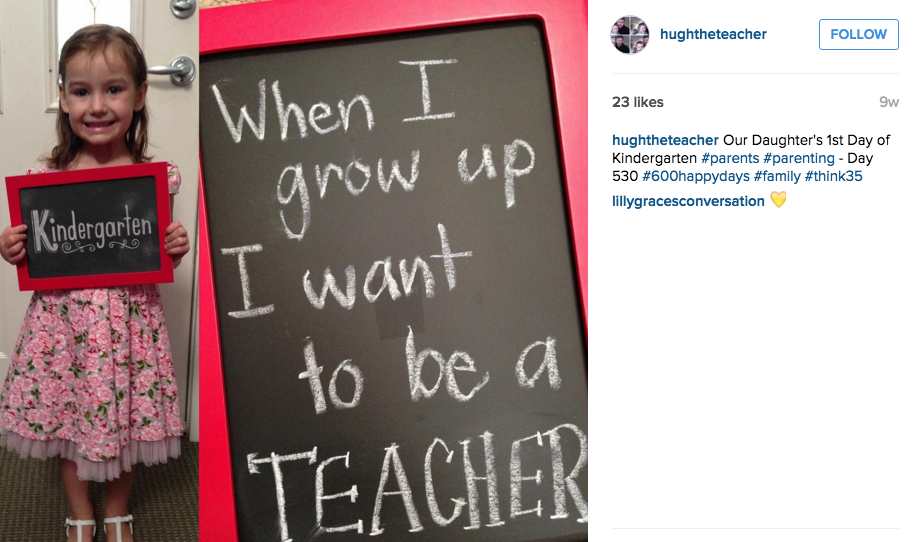
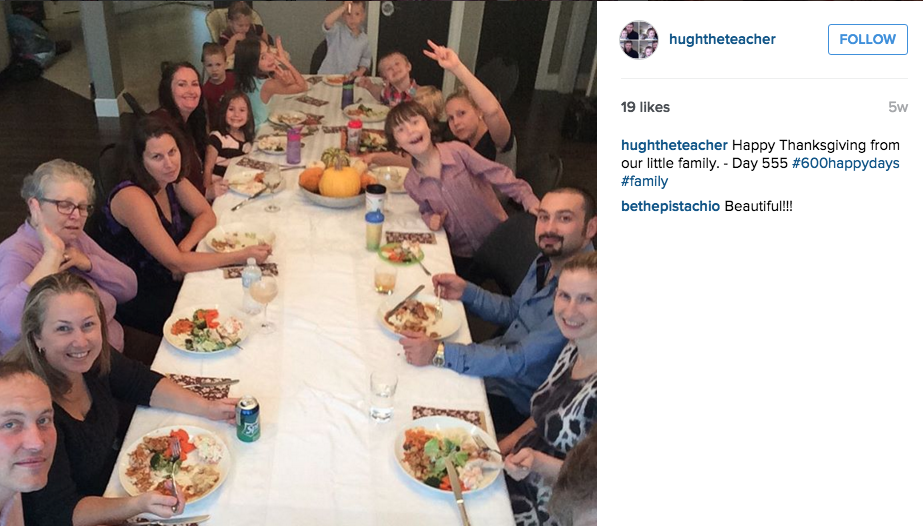
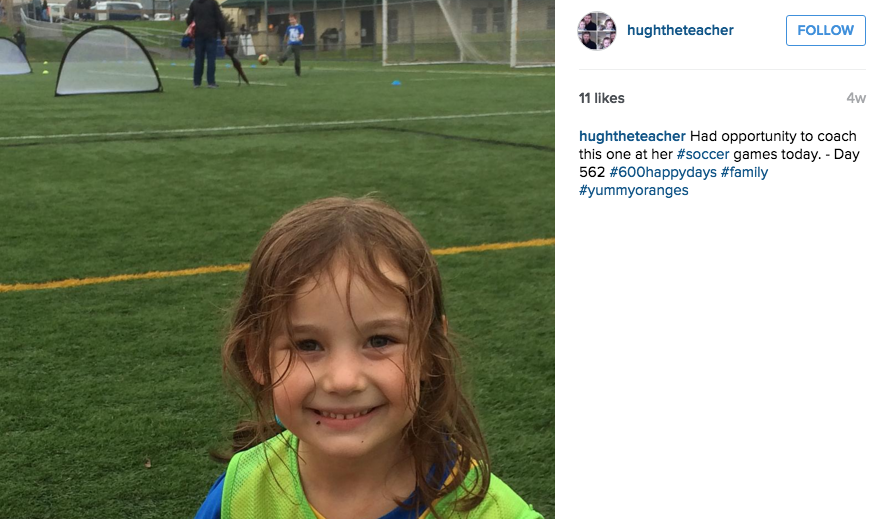
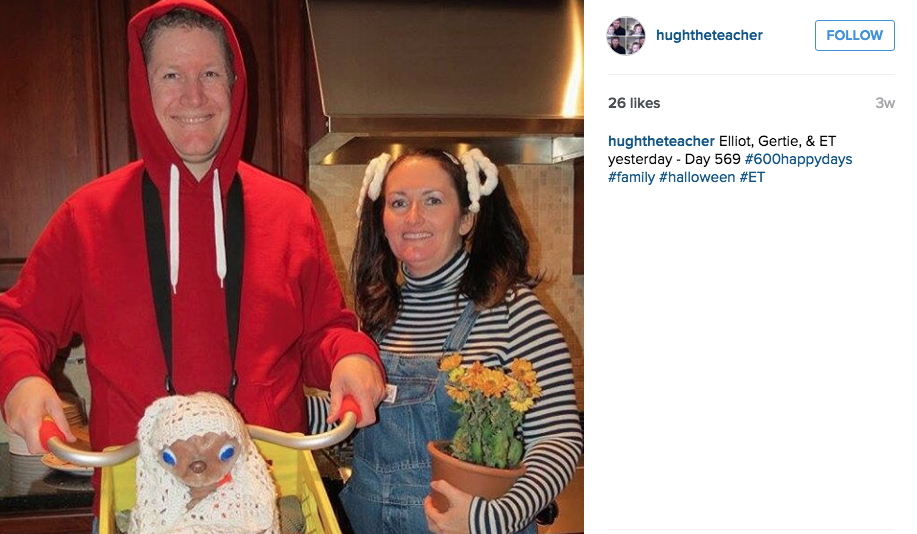
I’ve struggled to write this post for a long time. I was going to sit down and write it as I approached each century mark, and I couldn’t bring myself to write because I didn’t know how to clearly share with people why I decided to do it participate in the challenge and why I continued to extend it. It all started with a challenge from my friend Shawn Davids to start the 100 Happy Days Challenge which asked you to post 100 pictures of happy moments for 100 days on a social media platform of your choosing. It encouraged others to think about the happy moments in their life. He stopped and I & continued long after to where now I am approaching almost 600 days.
After my fathers passing in 2011 I struggled with focusing on the things/people that made me happy. I tried to fill my life with many personal and professional events that I enjoy participating in. During this time I had many professional breakthroughs and new opportunities from those breakthroughs. Managing my happiness with these breakthroughs while inwardly struggling with the personal challenges presented by my father’s passing was confusing for me, and I struggled to make sense of it and enjoy the happy moments that were all around me.
The 100 Happy Days Challenge has helped me reflect about each day & help me see that even with a difficult or disappointing day I can find something that makes me happy. However I know with the hashtag #100happydays #200happydays #300happydays, etc… that I have indirectly given some people the impression that I am always happy or that I am always trying to put on a act of being happy or that I was attempting to be someone I am not. This was never my intention and still it is not. It is all in how one perceives things. Ones perception is not always reality. Am I trying to “sell” this post and my instagram photos as someone who is always filled with happy moments? My simple answer is no. I am however using the photos as a way to reflect personally on moments that make me happy and put the focus on those moments rather on the difficult ones that have consumed my thinking and drained the joy from my happy moments previously. Do thoughts of my Dad and challenges pop into my mind still? Yes they do… but finding a happy moment in those days helps me through those days and gives me a lot to look forward to in the future.
Moments that now pop up on my memory wall on Facebook and spark a flood of emotions and awesome conversations with my kids, family, and at times my teaching colleagues. I couldn’t stop this project after 100 days. I was enjoying capturing these moments, sharing them and it was helping me with perspective and putting some focus back on the happy moments in my life. Many of the quick captured moments were of my kids experiencing life and sharing their joy with my wife and I.
Did I capture something every day? The answer is… almost. I have doubled up on some days. This was due to me not taking the time to get my camera out to capture the moment and sometimes due to me falling asleep before I could take the time to post it. Are all of my days filled with only happy moments. The simple answer is no. However many of days there were many big moments to choose from while other days there were singular moments that stood out and a few days that I was still searching for a moment late into the evening… important to note… I did find one. It is about Mindset and what you choose to focus on. I am learning to focus on things that make me happy. What makes you happy?
Today was a day of connection and reflection. We got to connect with new and old Discovery Education friends through experiencing the historical city of Washington, DC together. Nothing like remembering, honouring, (yes I spelled it with a “u”… I am Canadian. :)) and reflecting on the past while forging relationships with awesome people. People who are so willing to give of themselves and share their personalities and wealth of knowledge and experience. He goes…
1. I stood silently and in awe for a few minutes where Martin Luther King looked out from the steps of the Lincoln Memorial and gave his powerful “I Have A Dream” speech to hundreds of thousands of people calling for the end of Racism. It is a speech I present to my students yearly. We discuss it, analyze it, and celebrate the person who gave so passionately of himself in calling for equality for all.
2. I learned Franklin D. Roosevelt was a man of the people, the only president to be elected to 4 terms of office, and was confined to a wheelchair because he had polio. I was also awestruck by his words that were etched in stone, as I meandered through his (FDR memorial). He words celebrated his fellow person and honoured the people who elected him. I also loved the tribute to Eleanor Roosevelt as well.
3. I took a quiet reflective walk by myself through the Vietnam War Memorial. It is humbling to walk the path that honours those who died or went missing during this difficult time in American History. I am Canadian, and to be honest seeing the almost 60, 000 names listed on a beautiful reflective wall beside the path made me feel lucky I have never had to go to war and feel enormous amounts of respect and honour for those who did for a greater cause… their country and their fellow person. Whether you agree with war or not… reflecting on someone’s purpose can help you understand your own in deeper manner than before.
4. After a morning of Memorials being able to walk through the Smithsonian Museum of Natural history with my friend/colleague Robyn and my new friend from Nova Scotia, Erica. It truly was an impressive walk through this collection of historical artifacts and stories from early man, sea life, to the dinosaurs. Seeing the Dinosaur exhibit with Triceratops, T-Rex, and the archaeologists working was a definite highlight of this visit for. I wish I had more energy to continue on to other museums, but by 4 pm I was in need of a much needed nap. In the future I would love to see the Holocaust Museum and the Air and Space Museum.
5. After the bus ride back to American University I took a much needed nap, grabbed a quick bite at the cafeteria and then took off with some cool new friends to ride the metro and see the White House. It didn’t disappoint. I even loved catching a little video of the fireflies that danced on the grass as we approached the White House. I also loved being able to see the Washington Monument from any spot I stood in the city. Amazing!
I am amazed by the sheer number of monuments and historical places there are in Washington, DC. It is the perfect place to reflect, connect, and learn. I am extremely thankful to my district Surrey and Discovery Education who made this experience possible.
I think it is awesome that American’s honour their history in such a way. I can’t help but reflect on my need to visit Ottawa with my kids and take them across our country in telling the story of the country they call home.
Today was the first full day of sessions from DENsi 2015 and I couldn’t pick just 5 takeaways so you get 6 memorable moments from the sessions today. It was chalk full of rich learning opportunities. We had our opening morning session as well as 2 morning and 2 afternoon session that we were free to choose from. These presenters are teachers and DENstars from around North America and England.
** (I recognize this is finished a little later, but I needed time to synthesize the learning I experienced).
1. SOS Call for Digital Integration Session with Jannita Demian
Learning with Jannita Demian was a treat. We discussed how not all technology is created equally and not all lessons are created equally. Jannita discussed how our profession is to bridge the gap between pedagogy and technology. I couldn’t agree more. If you make the conversation about learning you connect us all. However if you make it just about the “tech” or start with tech first then you risk losing the people you want to engage.
What I loved about this session was how Discovery Education has created a Spotlight On Strategies created by teachers. They are accepting of more strategies and are adding and revamping this section constantly. These strategies are flexible and able to be used across subject areas. The strategies are searchable within Discovery Education and is accessible with your account that your district has. Each strategy gives you examples of how to use it in your classroom. They will also be sortable/searchable according to your purpose. You can even save your favourite (I am Canadian) and come back to it another time. 😀
Some Strategies discussed and shared at the session are:
Fakebook – Imagine a Facebook Profile that is editable within Discovery… or print one off and have your students fill out.
– AEIOU strategy
– Table – Top Texting
– Interactive Journals (draw something and then write out on other side)
– 3 Truths and 1 Lie
– Take images from discovery education and populate your screen savers
– 25 Things they didn’t know strategy … create their own boards using board builder or poster boards.
– SOUND CHECK is a Strategy Using ambient sound (have access to audio files)
Reading (or listening!) Between the Lines
Update their own Instagram Picture
SOS: Tweet Tweet!
2. Another take away was listening to Lori McFarling – Chief Marketing Officer of Discovery Education speak at the beginning of the day.
One of the virtual field trips she outlined was Auschwitz 70 The Past is Present. It was created from Shoah Foundation in connection with Discovery Education. They shared the survivor stories from survivors around the world in their own words with the students in our classroom. By getting these stories out there and connecting them to real life places for students you are giving them greater opportunity to build empathy and put the focus on the stories of the survivors rather than the ideologies of Hitler. Bringing families of survivors with the survivors to Auschwitz. Bottom of discoveryeducation.com …. lots of content available. I know knew I want to attend the Echoes and Reflection session tomorrow.
3. One thing that I found very cool was the 3M Young Scientist Challenge who with Discovery Education pair a young scientist up with 3M Innovator. The winner ended up on Ellen in 2013. This challenge was introducedto me by Kyle Schutt of Discovery Education.
4. David Fisher – DEN Speaks
Meeting and learning from David was a treat for me this week. He presented his DEN Legacy project by inspiring others to spend speaking 5 minutes on something they are passionate about in front of the 150 DENsi audience. David’s premise was we have all kinds of students in our classrooms. Let students who struggle do the same thing as everyone else. Everyone is on their own journey and some just need more building blocks (teacher support) to continue on the journey. It requires a lot of effort but the home run is worth it if your non communicable student walks up to you and says, “You taught me gravity.” I was impressed by his perspective during our conversations and in sessions I attended.
Thank you Neene for compiling the notes below from this jam packed with ideas session. I have added some of my thoughts below to her notes. I loved the many ideas Emily brought to this session. Some of these were new to me while others had me thinking… oh ya… I could have them show their learning this way.
What is Creativity?
The ability to transcend traditional ideas and create meaningful new ideas – a process that ebbs and flows
Cognitive Abilities
Behaviors
Attitude – ability to have thought about the world around us
Skills – combination of other three ways – ability to share out with the world
Are students re-creating or creating?
Devices can help our students be creative. Glitter and Glue and Scissors can now be even more sparkly with Digital Tools
Creativity is not new. It has always been around. It is just taking a greater step to the front.
It is now about thinking creative-ly in our classrooms.
Sir Ken Robinson – Creativity now is as important as literacy, and we should treat it.
Think Creatively.
Create new and worthwhile ideas
Padlet – http://padlet.com virtual sticky notes and can be used as a virtual word wall or collaborative space. I love this idea on how to be collaborative outside and inside of the walls of a classroom. In order to work as a team you need to be prepared to ask your own questions
Working in a group through kinesthetic learning. Movement to songs such as Lodge McCammon – lodgemccammon.com and through DiscoveryEducation.com (search term “lodge” will bring up many). Including music into my teaching practice is something I have done sparingly over the years. I learned Lodge has many interesting songs about a lot of learning topics. One of the ideas is pick one of his songs, pass on a verses to groups of students, have them think of ways they are going to act out the lyrics, start the video camera, and then have the groups roll through the screen acting out and dancing to their verse until it is done and then the next group jumps in.
Implement Creative Ideas
Board Builder within Discovery Education is one tool that could be used. It was originally created with students in mind. They can add own text, video, and resources. Now group boards are available. Multiple students can edit the same Discovery Education Board Builder board. It is a secure site and only viewable by other Discovery Education users. Teacher moderates the sharing to the Discovery Community. I feel fortunate that our district (Surrey) is a Discovery district. I look forward to making sure my class is set up with their usernames and passwords near the beginning of the year, so we can take advantage of this tool.
Teaching Creatively
Go beyond identifying a word. Perhaps substitute another word. Be engaged, demonstrate understanding.
Consider writing an original poem that is inspired by the original but shares their own creativity
Rather than just creating shapes, arrange shapes to create a new image/shape
Spotlight on Strategies – SOS from Discovery Education offer many ideas for how to be creative in the classroom. There are over 70 strategies currently available. And more will be coming soon. [denblogs.com]
Some quick ways to spark creativity in daily activities
Brainstorming – model is appropriately in daily activities Ex: create a quick list of things with one category hot? old? sour? animals that exist in the rainforest? Students will be able to go from the mundane to the instructional when the thought process has been modelled
Caption images – goal: help students think concisely and go beyond. Ex an image presented and look for caption that would summarize it. Consider exploring the “6 Word Story” SOS to integrate this concept in your classroom
Forced Associations – example How is a Window is like a pair of glasses? Teacher is like a dictionary? How is a number like a letter? Students may share things that need revisiting or further exploration
Brandon Wislocki shared with Emily how his students use paper and crayons and a camera to “present” their ideas and knowledge. Emily shared the video with the crowd.
Use songs as the backgrounds to student videos to interact, create, and share their learning
Heidi Morgan shared with Emily that no one app or tool did what they really wanted. So they started App Smashing to combine tools to create something closer to what they would like to really be sharing to demonstrating their learning http://goo.gl/g3Cr2K
Karie Huttner’s blogs icreateilearn.weebly.com / DENBlogs.com Karie shares many resources and ideas through both her own blog and the DENblogs.
Quote: “You can’t use up creativity. The more you use, the more you have.” the more you are creative with students the more creativity will bubble up.
Follow @EmMurn to continue the conversation
6. Hall Davidson spoke next prior to our sessions today. He is a bundle full of energy and hard to keep up with. However his energy is contagious and I love his passion for what he talks about. In thinking about his presentation I think he talks with others in much the same way I do. He speaks in tangents in an excited voice that you can’t help be energized by. Besides his motto of the smartest person in the room is the room is something I’ve believed in for a while now and is a big reason to why Genius Hour is something I am passionate about. Students bring their passions and knowledge to the classroom daily and share it with each other. Often I find myself referring students to other students when they are needing help with something. I am a big believer of the smartest person in the room is the room. Hall is an engaging personality that goes off on quick and passionate tangents throughout his presentation.
He talked about many different tools to help students and teachers to ask questions make sense of their own learning. Some of these ideas included:
Shazzam
Jet Propulsion Laborotory
– HyperDuino
Leap Motion
Google Cardboard
Osmo – Masterpiece
Download Quiver and draw in Osmo
Penveu
HyperDuino
Building Lessons using Pinterest
We all have the ability to use Powerpoint and save them as pictures and airdrop them into ipad and use a lot of different applications on ipad to manipulate content in meaningful ways to learners. Some ways he suggested were:
Puppet Pals
Puppet Pals 2
Kahoot – Game Based Learning in the Classroom – Goal to create questions that make you think. Answer the questions
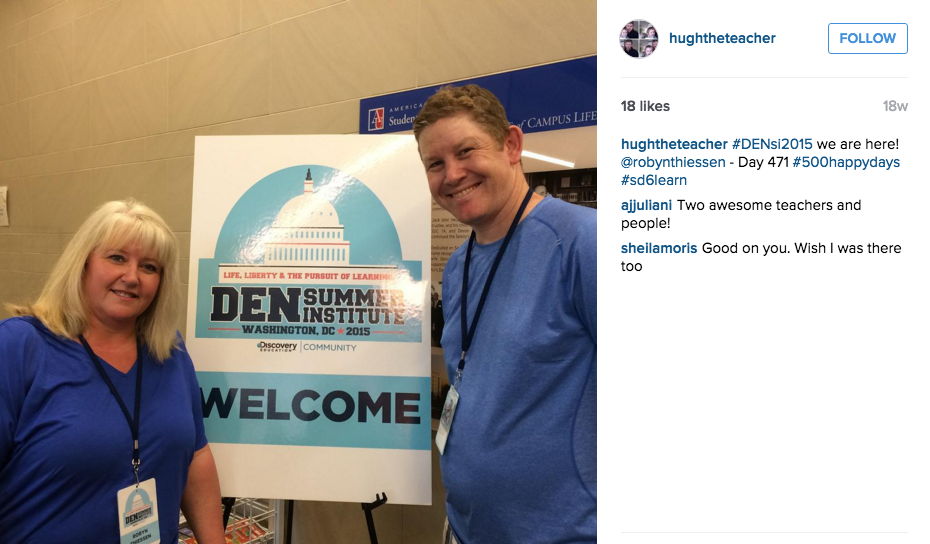
I feel extremely excited to be here in Washington, DC for Discovery Education Network’s (DEN) Summer Institute. DENsi2015 (DEN – ES – Eye). As a newbie I was welcomed into the DEN family with an inspiring and welcoming first day. I am going to attempt to document 5 of my takeaways each day for each of the next 5 days. Here goes!
1. Getting the finger is a good thing. It is given to honour those who go above and beyond and inspire us all. We then cheer and wave our #1 finger in the air and woooooooo. Thank you to DEN team and the Leadership Council Volunteers who got us organized and helped this newbie and many others make their way through the day.
2. RJ Stangherlin is inspiring and she had us in tears. She shared her story of conquering rare cancers and the loving support she received from her husband and she credits the DEN community who helped her beat them. The DEN is a wonderful place full of caring people and the common theme through the evening is that trust is built through experiences and support comes from your family. The DEN is a family, and I am honoured to be part of it.
3. The power of connection, and conversation with new friends who seek to understand and appreciate your why as a teacher. Being a newbie to the DEN community I’ve learned the power of these relationships through the inspiring stories shared by RJ Stangherlin and Lance Rougeux. Lance talked about the power of family and support the DEN gave him during some difficult times in his life and the endless support the DEN gives to his passion project The Purple Feet Project and to the great lengths the DEN has gone to support him and his family personally. I am learning that the DEN is an amazing and supportive place.
Relationships and community first and learning about all the cool tech tools to support teaching and learning 2nd. Without the first the second means little. We want to do the best work of our lives. This is why we are here… to learn about these from new trusting friends who we have connected with, and they share how they’ve used them with students and colleagues in their districts and schools.
4. Trace Dominguez is a super inspiring guy who and creates content for DNews on youtube. In a little over 2 1/2 years they have over 1.3 million subscribers (at least one more after I clicked the button) and well over 7 million views on their many entertaining videos they create each day. I learned I need to watch more of the videos him and his team create about a variety of questions and introduce them to the kids in my class and have them soak in what he has to say and engage in conversations about them with them. Trace also mentioned the 3 question principle which is getting kids to ask the 3rd question about a topic before you ask it of them. Ask the first question, find the answer, then ask a question about what you learned, find answer, ask a question about the second thing your learned, and find answer. I’ve always believed in this form of inquiry, but I didn’t hear it stated as simply as Trace did today. The odds are if they get to the 3rd question they will go much further themselves on the question they were initially asking themselves on but on countless topics inside and outside of school. Trace is a learner and inspires others to be a learner too. Think of the modern day Bill Nye the Science Guy and that is who he is.
5. Lance Rougeux said amazing teachers don’t see what they do everyday as anything different than what other teachers do and don’t understand what they can offer to others by sharing. It reminded me of the Derek Sivers video above. “Obvious to You. Amazing to Others”. I learned the power of the DEN is sharing learning stories and connecting on a deeper level with your colleagues. We all have something that is obvious about what we do but when we share and connect we have the ability to spark amazing in others together as a community and as a family. All this and it is only the first day.





 Today is a Great Day for Learning